
 Available in US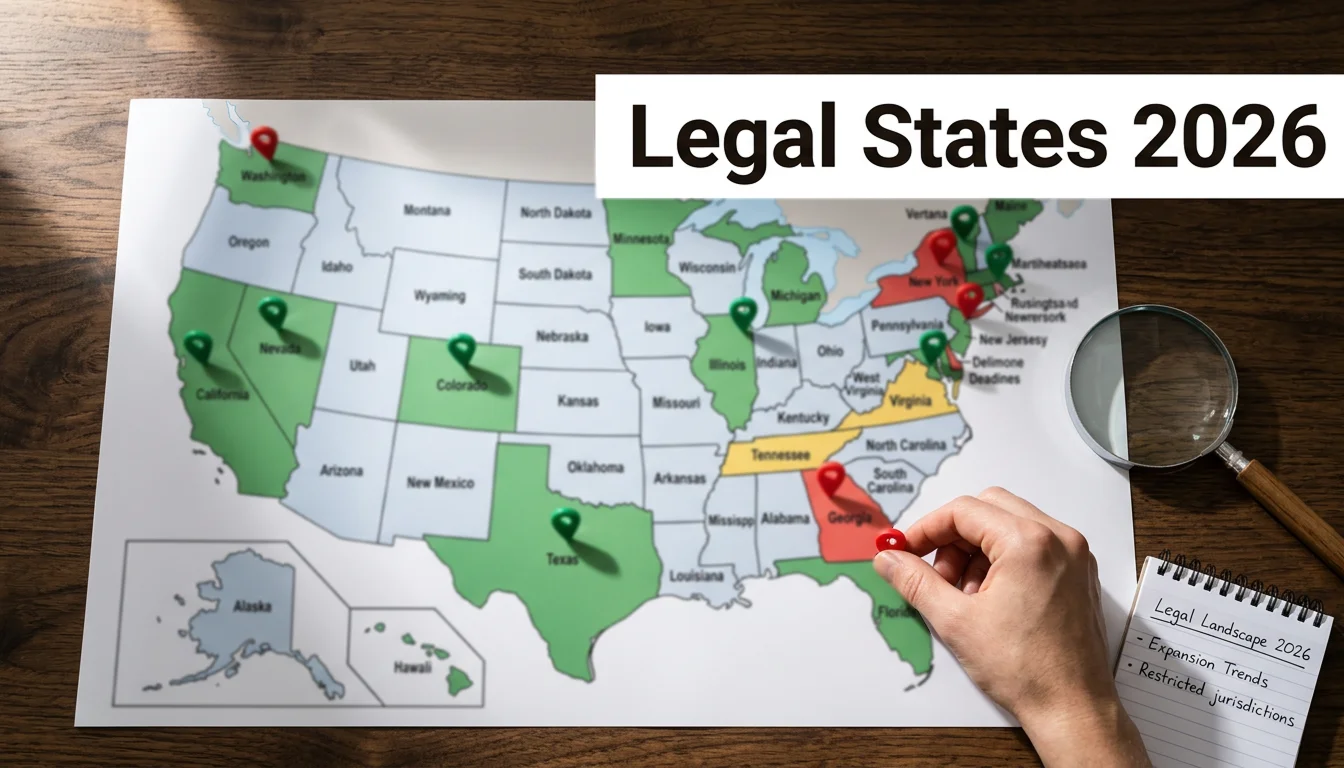
The sweepstakes casino map keeps shrinking. What was once a near-nationwide operation spanning most of the United States has contracted significantly in the past eighteen months. Regulators, attorneys general, and legislators have collectively decided that the sweepstakes model—once a legal gray area exploited by dozens of operators—demands either formal recognition or outright prohibition. Most have chosen the latter.
Understanding which states allow sweepstakes casinos in 2026 requires tracking both legislation and enforcement actions. A state might not have a formal ban on the books, yet its attorney general may have sent cease-and-desist letters to every major operator. Conversely, a state with pending legislation might still allow play while lawmakers debate. The situation is fluid, and what was true six months ago may no longer apply.
According to data from iGaming Business, more than 100 cease-and-desist letters were sent to sweepstakes operators across the country in 2025 alone. Six states enacted formal legislative bans during that year, while several others pursued enforcement through existing gambling statutes. The result: roughly a dozen states now effectively prohibit sweepstakes casino operations, with more restrictions likely coming.
This guide breaks down the current legal landscape state by state. We cover where you can play freely, where you cannot play at all, and where the situation remains uncertain. We also examine what triggered the 2025 crackdown, which enforcement actions had the most impact, and what pending legislation might further reshape the market in the months ahead.
States Where Sweepstakes Casinos Are Legal
The good news for sweepstakes casino players: the majority of US states still permit these platforms to operate. The model—where players use virtual currencies like Gold Coins for entertainment and Sweeps Coins for potential prize redemption—remains legal in approximately 35 to 38 states, depending on how you count states with active but unenforced restrictions.
The following states have no legislative ban and no significant enforcement action against sweepstakes casinos as of early 2026: Alabama, Alaska, Arizona, Arkansas, Colorado, Delaware, Florida, Georgia, Hawaii, Illinois, Iowa, Kansas, Kentucky, Maine, Maryland, Massachusetts, Minnesota, Mississippi, Missouri, Nebraska, New Hampshire, New Mexico, North Carolina, North Dakota, Ohio, Oklahoma, Oregon, Pennsylvania, Rhode Island, South Carolina, South Dakota, Tennessee, Texas, Utah, Vermont, Virginia, Wisconsin, and Wyoming.
Players in these states can register at major sweepstakes platforms like Stake.us, McLuck, WOW Vegas, Pulsz, and Chumba Casino without geographic restrictions. Registration typically requires standard identity verification—name, date of birth, email, and physical address—but no purchase is necessary to play. The “no purchase necessary” element is precisely what keeps these operations legal under federal sweepstakes law.
States With Licensed iGaming
An interesting quirk: some states with fully regulated real-money online casinos still permit sweepstakes operations. Delaware, Pennsylvania, and Rhode Island all have licensed iGaming markets, yet sweepstakes casinos continue to operate there. The two models coexist, sometimes serving different player segments—sweepstakes appeal to those who want casino-style entertainment without making deposits, while licensed iGaming attracts players comfortable with real-money wagering.
According to the KPMG Sweepstakes Gaming Industry Primer, regulated iGaming is currently available in just 8 states, compared to sweepstakes casinos in more than 35 states. This accessibility gap explains much of the sweepstakes industry’s growth. Players in states without licensed online casinos have few legal alternatives for online casino-style gaming, and sweepstakes platforms fill that void.
States With Tribal Gaming Influence
Several states with significant tribal gaming operations have not moved against sweepstakes casinos, despite the model theoretically competing with tribal casino revenue. Arizona, New Mexico, Oklahoma, and Minnesota all have robust tribal gaming compacts and substantial brick-and-mortar casino presence, yet sweepstakes platforms remain accessible. The lack of enforcement in these states suggests either a deliberate policy choice or simple regulatory prioritization—tribal gaming commissions may view sweepstakes as a lower-tier concern compared to illegal offshore sportsbooks or unlicensed slot machines.
That said, tribal interests have driven enforcement elsewhere. Washington State’s longstanding sweepstakes ban exists partly due to tribal gaming influence, and California’s recent prohibition followed significant tribal lobbying. Players in states with powerful tribal gaming lobbies should monitor legislative developments closely.
Rural and Low-Population States
States with smaller populations and fewer gaming options—think Wyoming, South Dakota, Nebraska, and Kansas—generally permit sweepstakes casinos without restriction. These states lack the regulatory infrastructure and political pressure that drive enforcement in larger markets. A state attorney general in Wyoming faces different priorities than one in New York, where the sweepstakes market once represented hundreds of millions in annual revenue.
This creates an odd geographic pattern: players in Manhattan cannot access Stake.us, but players in rural Montana face their own restrictions due to a 2025 legislative ban. The legality of sweepstakes casinos has nothing to do with urban versus rural settings and everything to do with specific state political dynamics, existing gambling frameworks, and which interest groups have legislators’ attention.
States With Unclear Status
A handful of states occupy a gray zone. Louisiana, for example, saw its Gaming Control Board issue 40 cease-and-desist letters to operators in 2025, yet no formal legislative ban exists. Some operators have exited the state voluntarily; others continue to accept Louisiana players while the legal situation develops. West Virginia presents a similar picture—the attorney general issued 47 subpoenas to operators, and more than 40 exited the market, but the state never passed a formal prohibition.
Players in these gray-zone states face uncertainty. An operator accepting registrations today might withdraw tomorrow if enforcement intensifies. The safest approach: check each platform’s terms of service for state-specific restrictions before depositing money or accumulating significant Sweeps Coin balances.
Banned States: Full List and Reasons
Nine states now effectively prohibit sweepstakes casino operations through either legislative action or aggressive enforcement. The list includes California, Connecticut, Idaho, Michigan, Montana, Nevada, New Jersey, New York, and Washington. Each arrived at prohibition through a different path, and understanding those paths helps predict where the next bans might emerge.
Washington: The Original Ban
Washington State has prohibited sweepstakes casinos longer than any other jurisdiction. The state’s gambling statute, RCW 9.46, takes an unusually broad view of what constitutes illegal gambling, and courts have consistently interpreted it to cover sweepstakes models. Washington’s ban predates the modern sweepstakes casino boom—it stems from earlier enforcement against internet cafe-style operations that used similar promotional gaming mechanics. The state’s tribal gaming interests, which generate billions in annual revenue, have supported maintaining these restrictions.
Idaho: Conservative Gambling Laws
Idaho prohibits most forms of gambling outside the state lottery and tribal facilities. The state’s conservative approach to gaming extends to sweepstakes casinos, which are blocked under existing statutes rather than new legislation. Idaho never needed a specific law targeting sweepstakes—its existing framework was already hostile to any form of prize-linked gaming that resembles casino play.
Nevada: Protecting the Industry
Nevada’s prohibition might seem counterintuitive given the state’s reputation as America’s gambling capital. The logic, however, is straightforward: Nevada’s highly regulated casino industry views sweepstakes platforms as unlicensed competitors. State regulators and licensed casino operators have no interest in allowing unregulated operations to capture market share. The Nevada Gaming Control Board has made clear that sweepstakes casinos cannot operate in the state without proper licensing—and no sweepstakes operator has obtained such a license.
Michigan: iGaming Protection
Michigan legalized online casinos and sports betting in 2019 and launched its regulated iGaming market in 2021. The state quickly moved to exclude sweepstakes operators, viewing them as competitors to the licensed platforms that pay state taxes and licensing fees. Michigan’s approach reflects a broader pattern: states with regulated online gambling tend to restrict sweepstakes operations more aggressively than states without iGaming frameworks.
New Jersey and Connecticut: The 2025 Legislation
New Jersey and Connecticut both passed formal sweepstakes casino bans during the 2025 legislative session. Both states have established iGaming markets and well-funded gaming commissions with the resources to pursue enforcement. New Jersey’s ban followed pressure from Atlantic City casino interests, while Connecticut’s emerged from a combination of tribal gaming concerns and state regulatory preferences.
California and New York: The Big Markets
California and New York represent the largest market losses for the sweepstakes industry. California alone accounted for approximately 17.3% of the US sweepstakes market, worth an estimated $2.42 billion in 2025 according to research from Eilers & Krejcik Gaming. New York’s market was valued at $762 million. The combined loss of these two states removed roughly $3.2 billion from the industry’s addressable market.
Brian O’Dwyer, Chairman of the New York State Gaming Commission, summarized the regulatory perspective: “These so-called ‘sweepstakes’ games are unscrupulous, unsecure and unlawful. I have been very vocal about the need to crack down on these operations.”
California’s ban came via AB 831, signed by Governor Newsom in October 2025. The bill passed with unanimous support from both tribal gaming interests and licensed cardrooms, creating an unusual coalition of competitors united against a common threat. New York’s prohibition emerged through attorney general enforcement and legislation, with AG Letitia James sending 26 cease-and-desist letters to major operators in June 2025.
Montana: The Quiet Ban
Montana enacted a sweepstakes prohibition with less fanfare than its coastal counterparts. The state’s gambling code was amended to specifically exclude sweepstakes casino models, closing what legislators viewed as a loophole. Montana’s ban received minimal national attention but effectively removed another state from the available market.
These bans did not emerge in isolation. A coordinated enforcement campaign, accelerating throughout 2025, fundamentally altered the industry’s regulatory position.
The 2025 Crackdown: What Changed
The sweepstakes casino industry entered 2025 riding a wave of extraordinary growth. Revenue had climbed from $3.1 billion in 2022 to over $10 billion in 2024, according to Eilers & Krejcik Gaming data cited by iGaming Business. That growth rate—a compound annual increase approaching 60-70% over four years—attracted attention from regulators, legislators, and competing gambling interests. And then the walls closed in.
Six states enacted legislative bans during 2025: California, New York, Connecticut, Montana, Nevada, and New Jersey. According to Gambling Insider, this represented the most concentrated period of anti-sweepstakes legislation in the industry’s history. The bans were not random—they followed a coordinated campaign by regulated gaming interests, led by the American Gaming Association, to reframe sweepstakes casinos as illegal gambling operations rather than promotional entertainment.
The AGA’s Campaign
The American Gaming Association spent much of 2024 and 2025 building the case against sweepstakes casinos. The organization commissioned consumer surveys showing that 90% of sweepstakes players consider the activity to be gambling, and that 68% play primarily to win real money. These statistics directly contradicted the sweepstakes industry’s claim that its products are entertainment-focused promotional gaming rather than gambling.
The AGA also highlighted what it called regulatory disparities. Licensed casinos pay state taxes, undergo regular audits, maintain responsible gaming programs, and comply with anti-money-laundering requirements. Sweepstakes operators, by contrast, face none of these obligations. From the AGA’s perspective, sweepstakes casinos enjoy the revenue benefits of gambling without the compliance costs—an unfair competitive advantage.
State-Level Pressure
At the state level, the crackdown emerged from multiple pressure points. In California, tribal gaming interests viewed sweepstakes platforms as threats to their exclusive casino rights. In New York, state regulators saw sweepstakes operators capturing market share that might otherwise flow to state-licensed mobile gaming. In New Jersey, Atlantic City casinos worried about customer diversion.
The legal arguments varied by jurisdiction. Some states pursued sweepstakes operators under existing gambling statutes, arguing that the dual-currency model constitutes illegal gambling regardless of the “no purchase necessary” element. Others passed new legislation specifically targeting the sweepstakes model. Still others relied on attorney general enforcement actions rather than formal legislative bans.
The Class Action Threat
Beyond legislative and regulatory pressure, the industry faces approximately 50 active class-action lawsuits nationwide. These suits generally argue that sweepstakes casinos violate state gambling laws and that players are entitled to recover their losses. The lawsuits have not yet produced major judgments, but they create significant legal uncertainty and defense costs for operators.
The combination of legislative bans, enforcement actions, and private litigation created what industry observers call a “perfect storm” against sweepstakes casinos. Operators that once dismissed regulatory risk as minimal now face existential questions about their business models.
Industry Response
The sweepstakes industry has not accepted this crackdown passively. The Sweepstakes Gaming Leadership Association, formed in 2024, advocates for federal regulation that would legitimize the industry while imposing consumer protection requirements. The organization argues that sweepstakes casinos provide valuable entertainment to millions of Americans in states without iGaming options and that outright prohibition merely drives players toward offshore gambling sites with no consumer protections whatsoever.
Whether this defense succeeds remains unclear. The momentum in early 2026 still favors prohibition—more states are considering bans than are considering regulatory frameworks for sweepstakes operations.
State-by-State Enforcement Actions
Legislative bans tell only part of the story. In several states, enforcement actions have effectively prohibited sweepstakes casinos without formal legislation. These enforcement-driven restrictions create particular uncertainty because they can emerge suddenly, leaving players and operators scrambling to adjust.
New York: The AG Offensive
New York Attorney General Letitia James launched an aggressive campaign against sweepstakes casinos in mid-2025. Her office sent 26 cease-and-desist letters to operators in June 2025, demanding immediate cessation of Sweeps Coin sales to New York residents. According to iGaming Business, every recipient of those letters complied—all major sweepstakes platforms stopped accepting New York players.
The speed of compliance reflects the risk calculus operators face. Fighting the New York AG in court would be expensive, time-consuming, and potentially damaging to operations elsewhere. Most operators concluded that voluntarily exiting the state was preferable to a legal battle they might lose.
West Virginia: Subpoenas and Exit
West Virginia’s attorney general took a different approach, issuing 47 subpoenas to sweepstakes operators in 2025. The subpoenas demanded detailed information about business operations, player data, and financial records. Rather than comply with what amounted to a fishing expedition, more than 40 operators simply withdrew from the West Virginia market.
This enforcement pattern—using investigative demands to pressure market exit—may become a template for other states. It requires no new legislation and no formal regulatory action, just an attorney general willing to deploy investigative tools aggressively.
Louisiana: The Gaming Board Acts
Louisiana presented a particularly frustrating case for the sweepstakes industry. The state legislature considered and rejected a formal ban, with the governor ultimately vetoing restrictive legislation. The Louisiana Gaming Control Board, however, proceeded independently, sending 40 cease-and-desist letters to operators regardless of the legislative outcome.
The result is legal confusion. Louisiana has no statutory ban on sweepstakes casinos, yet the state’s gaming regulator has told operators they cannot operate there. Some operators have withdrawn; others continue to accept Louisiana players while monitoring whether the Gaming Control Board takes further action.
Arizona, Ohio, and Kentucky: Warning Signs
Several states that still permit sweepstakes casinos have shown warning signs of potential enforcement. Arizona’s attorney general has publicly questioned the legality of sweepstakes operations. Ohio gaming regulators have expressed concerns about consumer protection. Kentucky legislators have discussed potential restrictions during recent sessions.
Players in these states can still access sweepstakes platforms, but the long-term outlook is uncertain. A change in attorney general, a high-profile consumer complaint, or renewed pressure from regulated gaming interests could trigger enforcement actions at any time.
Florida: The Exception
Florida represents an interesting counterexample. The state has substantial gambling interests—tribal casinos, pari-mutuel facilities, a recent mobile sports betting launch—yet has shown no appetite for sweepstakes enforcement. Florida’s regulatory attention appears focused elsewhere, and sweepstakes operators continue to serve the state’s large population without restriction.
Whether Florida remains open depends on political dynamics. The Seminole Tribe, which holds exclusive rights to certain gaming activities in the state, has not prioritized sweepstakes as a competitive threat. If that calculus changes, Florida could join the restricted column quickly.
Tracking Enforcement
The challenge for players is that enforcement actions can emerge rapidly and without warning. A state might permit sweepstakes casinos on Monday and issue cease-and-desist letters on Tuesday. Unlike legislative bans, which involve public debate and advance notice, enforcement actions can catch players off guard.
The best practice: monitor operator announcements and industry news for any state where you play regularly. Operators typically notify players of geographic restrictions via email, and withdrawing funds before restrictions take effect is always preferable to having an account frozen during regulatory uncertainty.
Pending Legislation and Future Bans
The 2026 legislative season has already produced several bills targeting sweepstakes casinos, with more likely to emerge as state legislatures convene throughout the year. Players should monitor developments in the following jurisdictions.
States With Active Bills
Illinois has introduced legislation that would bring sweepstakes casinos under the state’s Gaming Board oversight, effectively requiring licensing and regulatory compliance that most operators would likely decline. The bill has not advanced to a floor vote as of March 2026, but it has significant support from the state’s licensed casino industry.
Georgia legislators have discussed sweepstakes restrictions as part of broader gambling debates. The state lacks commercial casinos and regulated iGaming, but lottery interests have expressed concerns about sweepstakes platforms diverting player spending. A formal bill could emerge during the current session or in 2027.
Massachusetts has held hearings on sweepstakes casino regulation, with testimony from both industry representatives and opponents. The state’s Gaming Commission has the authority to interpret existing gambling law to cover sweepstakes operations, meaning a ban could emerge through regulatory action rather than legislation.
States to Watch
Several states seem likely to consider sweepstakes restrictions based on recent patterns. States with strong tribal gaming interests—Minnesota, Oklahoma, and New Mexico—could face pressure from those tribes to restrict competing sweepstakes operations. States with new or expanding iGaming markets might follow Michigan’s example and exclude sweepstakes to protect licensed operators.
Pennsylvania, which has one of the country’s largest regulated iGaming markets, has not moved against sweepstakes casinos but could do so as its licensed operators mature and seek regulatory protection from unlicensed competition.
Federal Possibilities
At the federal level, no sweepstakes-specific legislation appears imminent. However, the Department of Justice has historically shown interest in online gambling enforcement, and a future administration could direct federal resources toward sweepstakes operations. The Wire Act, which prohibits certain forms of interstate gambling, could theoretically apply to sweepstakes casinos that process transactions across state lines.
The sweepstakes industry itself has proposed federal regulation through the SGLA framework, which would establish licensing requirements, consumer protections, and tax obligations in exchange for legal clarity. Whether Congress has any appetite for such legislation remains doubtful—gambling regulation has traditionally been left to states, and the political will for federal intervention does not appear to exist.
Timeline Uncertainties
Predicting which states will act next is inherently speculative. Legislative priorities shift, attorney general interests vary, and gaming industry lobbying efforts wax and wane. What seems clear is that the overall trend favors restriction rather than expansion. The sweepstakes casino industry’s addressable market will likely shrink further over the next two years, though the pace and extent of that contraction remain uncertain.
What Happens If You Play From a Restricted State
Players sometimes attempt to access sweepstakes casinos from restricted states using VPNs or by providing false address information during registration. This approach carries significant risks that far outweigh any potential benefits.
Account Suspension and Fund Forfeiture
Sweepstakes operators conduct address verification during registration and again during redemption requests. If an operator determines that a player registered from a restricted state—or moved to one after registration—the standard response is immediate account suspension. The operator’s terms of service typically permit forfeiture of any remaining balances, both Gold Coins and Sweeps Coins.
Players who accumulated substantial Sweeps Coin balances before a state restriction took effect sometimes face forfeiture even though they registered legally. Operators generally honor withdrawal requests submitted before restrictions begin but freeze accounts that remain active after the cutoff date. The lesson: when your state announces restrictions, withdraw available funds immediately rather than waiting to see how enforcement develops.
Legal Exposure
Beyond account-level consequences, playing from a restricted state could theoretically expose players to legal liability. While no US jurisdiction has prosecuted individual sweepstakes casino players to date, providing false information to an operator constitutes fraud in most states. Players who use VPNs to circumvent geographic restrictions are knowingly violating both operator terms and potentially state law.
The practical risk of prosecution remains low—state attorneys general focus enforcement resources on operators rather than players—but the risk is not zero. A high-profile case involving a player who won substantial prizes while violating geographic restrictions could prompt prosecutorial interest.
The Practical Reality
Most operators maintain robust geolocation systems that detect VPN usage and flag suspicious registration information. Attempting to circumvent these systems is both legally risky and practically difficult. Players in restricted states should accept that sweepstakes casinos are not available to them and explore whatever legal gaming options their jurisdiction permits—state lotteries, daily fantasy sports, or tribal casinos where applicable.
How to Check Your State’s Status
Determining whether sweepstakes casinos are available in your state requires checking multiple sources, as restrictions can emerge from legislation, regulatory action, or operator-specific decisions.
Operator Terms of Service
The most reliable source is each operator’s terms of service or help center. Major platforms like Stake.us, McLuck, and Chumba Casino maintain updated lists of restricted states. These lists sometimes exceed the states with formal bans because operators may voluntarily withdraw from jurisdictions facing regulatory pressure even before official restrictions take effect.
Registration Process
Attempting to register typically provides immediate clarity. Operators block registration from restricted states at the first step, usually when you enter your address or phone number. If registration proceeds normally, your state is currently permitted. If you receive a restriction message, the platform is not available in your jurisdiction.
State Gaming Commission
For states with gaming commissions or lottery boards, official websites sometimes publish guidance on sweepstakes casino legality. However, many states have no formal position—the absence of guidance typically indicates that sweepstakes operations are tolerated by default rather than explicitly approved.
Industry News
Following gaming industry publications provides advance warning of upcoming restrictions. Sites covering gambling legislation often report on pending bills, attorney general statements, and regulatory actions before they affect player access. Knowing that your state is considering restrictions gives you time to manage existing balances and explore alternative platforms.
The sweepstakes casino landscape changes quickly. A status check that was accurate in January might be outdated by March. Players should verify their state’s status periodically, particularly before making significant purchases or accumulating large Sweeps Coin balances that could be affected by sudden restrictions.